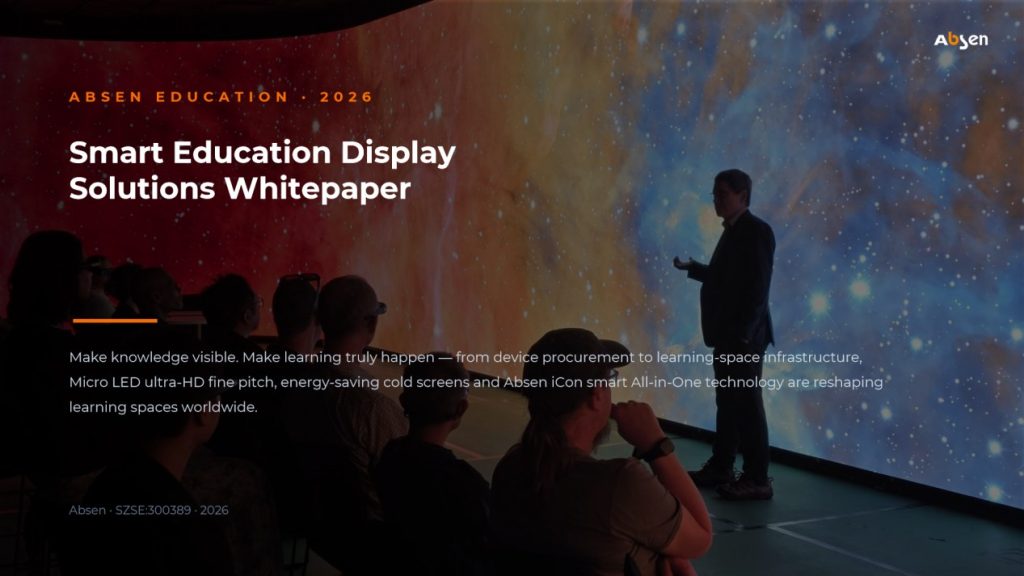
On September 28, Absen officially released the Smart Education Display Solutions White Paper. As an industry white paper dedicated to smart education display infrastructure, the report analyzes the industry shift from standalone display equipment procurement toward integrated learning space infrastructure development. It identifies four key drivers accelerating the transformation of smart education displays and introduces a next-generation five-dimensional capability matrix. Combining multi-technology comparisons with real-world implementations across six educational scenarios, the report draws on extensive real-world project case studies from domestic and international institutions to demonstrate the value of smart education display infrastructure in supporting institutions’ digital transformation and ESG zero-carbon campus development, offering practical guidance for future learning space development globally.
Changing Demands: Driving the Evolution of Educational Display Standards
Amid accelerating digital transformation, smart campus development continues to advance. The role of display systems in educational settings is undergoing a fundamental transformation. Driven by multiple converging factors, including the normalization of hybrid and flexible learning, the advancement of campus-wide digital governance, growing demands for healthier learning environments among teachers and students, and the ESG green transition across higher education institutions, conventional display devices focused solely on visual clarity can no longer meet the comprehensive needs of modern education. The industry now calls for a new generation of learning space infrastructure that supports the entire teaching and learning lifecycle.
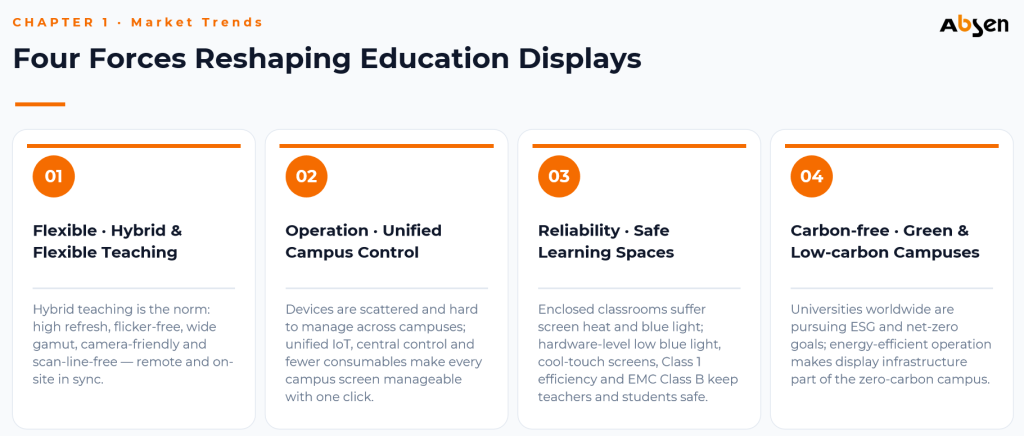
The white paper identifies four key forces reshaping the smart education display industry. First, hybrid and flexible teaching has become the classroom norm: synchronous online and in-person instruction, together with regular lecture recording, has raised requirements for high refresh rates, flicker-free performance, and camera-friendly displays. Second, unified, campus-wide centralized control has become an essential operational need, resolving maintenance challenges caused by fragmented multi-campus deployments and heterogeneous device ecosystems while enabling integrated management of all campus screens. Third, instructional space safety has emerged as a vital benchmark, with hardware-level low blue light, cool-to-the-touch display surfaces, and Grade 1 energy efficiency serving as critical procurement thresholds. Fourth, green and low-carbon practices have been integrated into campus infrastructure systems, making display energy consumption an important factor in carbon reduction calculations for zero-carbon campuses. Meanwhile, the white paper presents a core insight: the value of educational displays has undergone an iterative upgrade, shifting from simply “clear visibility” to “enabling effective teaching, centralized management, comprehensive protection, and long-term reliability,” which serves as the fundamental driver behind the demand for five-dimensional capability enhancements.
Five-Dimensional Display Capabilities: Defining Next-Generation Educational Display Systems
Departing from the conventional industry practice of relying solely on hardware specifications as a benchmark, the white paper transcends simple parameter comparisons. Rooted in authentic instructional scenarios, it establishes a five-dimensional capability matrix encompassing “Visual Health, Spatial Interactivity, Green and Low-Carbon Capability, Unified IoT Capability, and Industrial-Grade Reliability,” setting a comprehensive evaluation standard for next-generation educational display systems.
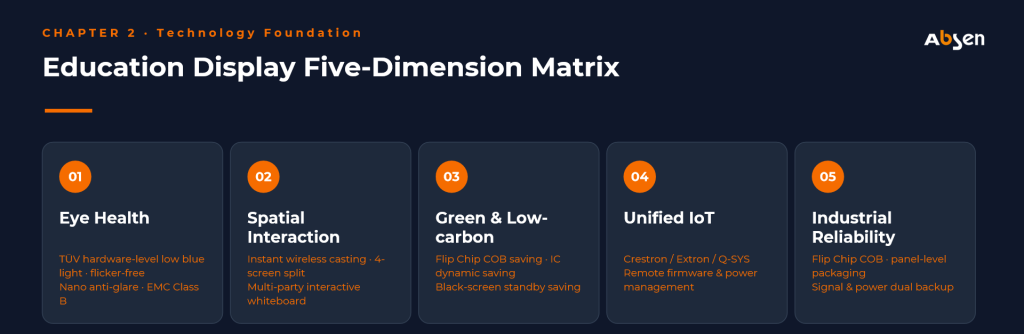
Visual health moves eye protection for teachers and students upstream to the hardware foundation. Unlike software-filter low-blue-light solutions, Absen iCon series products have obtained TÜV hardware-level low-blue-light certification, filtering out harmful blue light from 415 to 455 nm. The series also incorporates flicker-free performance at low gray levels, nano anti-glare treatment, and a 160-degree wide-angle glare-free view, guaranteeing an optimal viewing experience from every seat in the classroom and alleviating visual fatigue caused by long class sessions at the source.
Spatial interactivity focuses on lowering the barrier to use for teachers. Featuring instant wireless screen projection, four-way split-screen display, and collaborative whiteboard annotation, the system delivers plug-and-play simplicity, ensuring technology serves pedagogy rather than adding to the teaching burden.
Green and low-carbon capability aligns with campus ESG development requirements. Powered by flip-chip COB, dynamic IC energy-saving technology, and cool-to-the-touch screen technology, the equipment achieves National Grade 1 energy efficiency and reduces energy consumption by 35%–40% compared to conventional devices. The white paper’s calculation model indicates that across 50 classrooms equipped with 136-inch screens operating continuously for five years, cumulative electricity savings exceed 150,000 kWh, equivalent to a carbon reduction of 3.8 tons per classroom over five years. This transforms display hardware into a measurable solution for campus carbon reduction.
Unified IoT capability is dedicated to breaking down campus system silos. It provides native compatibility with mainstream central control systems, video conferencing, and LMS teaching platforms, while open APIs eliminate proprietary protocol lock-in, enabling unified scheduling and centralized management of all screens across the campus.
Industrial-grade reliability extends the asset lifecycle of educational equipment to 8 to 10 years. By adopting fully cured polymer resin encapsulation to provide impact and moisture resistance, along with magnetic front-service modules and zero consumable wear parts, it effectively reduces operation and maintenance costs across the entire product lifecycle.
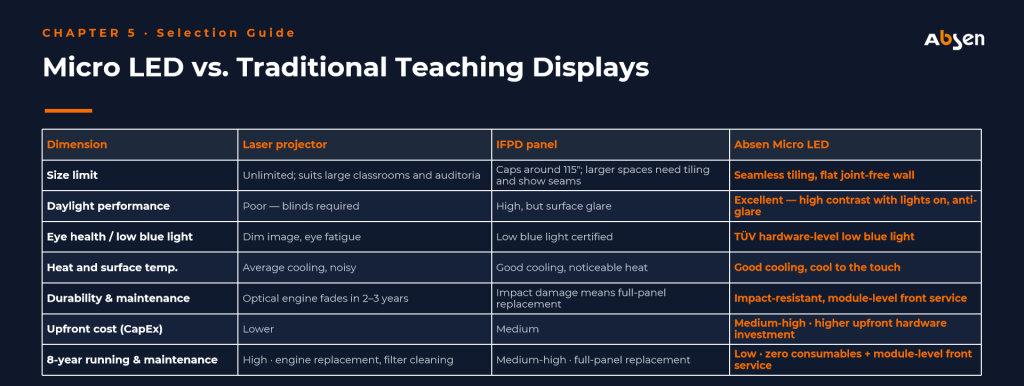
The white paper also provides an objective comparison of mainstream educational display technologies—laser projection, interactive flat panel displays (IFPD), and MicroLED—each of which has its own suitable applications. Laser projection is well suited to large spaces with controllable ambient lighting and budget-conscious applications; IFPD interactive whiteboards are well suited to close-range writing and interaction in small-to-medium-sized classrooms; and when instructional spaces are larger, ambient light is complex, and equipment runs at high frequencies, MicroLED’s advantages in anti-glare performance, durability, maintenance, and overall TCO become more pronounced, providing a practical reference for institutional selection.
Deployment in Six Major Instructional Spaces: Full-Lifecycle Services Supporting Smart Campus Transformation
Campus instructional spaces vary widely in function and format, and no single display system can fit every teaching scenario. Centered on key campus operations across teaching, learning, research, communications, culture, and sports, the white paper identifies six representative instructional spaces: standard smart classrooms, tiered lecture halls and academic auditoriums, virtual simulation training XR/CAVE spaces, hybrid interactive seminar rooms, smart campus digital signage, and multifunctional campus performing arts and athletic centers. Absen’s comprehensive product matrix, comprising the iCon Series, KLCOB Series, and NX Series, covers all-in-one displays, standardized large screens, mobile foldable screens, and immersive displays, delivering customized solutions tailored to varying spatial scales and teaching objectives.
Smart education display infrastructure extends far beyond simple hardware delivery; comprehensive localized service capabilities are vital to ensuring successful solution implementation. Supported by the Absen Care global service system, Absen provides support throughout the entire project lifecycle: conducting site surveys, sightline analyses, and load-bearing assessments during the preliminary phase; completing steel structure installation as well as equipment installation and calibration during the implementation phase; and providing routine inspections, firmware updates, and on-site support for major educational events during the post-installation phase. Backed by a service network spanning 165 countries and regions and over 5,400 ACE-certified engineers, the company delivers rapid 24-to-48-hour response times in major cities, complemented by extended factory warranty services.
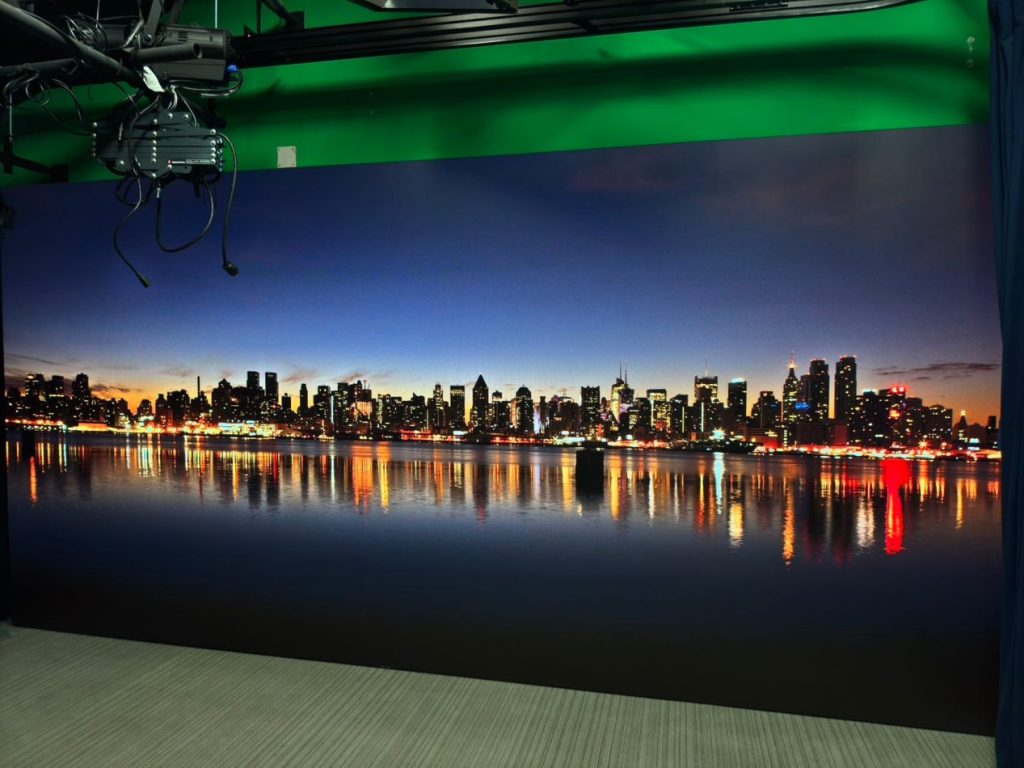
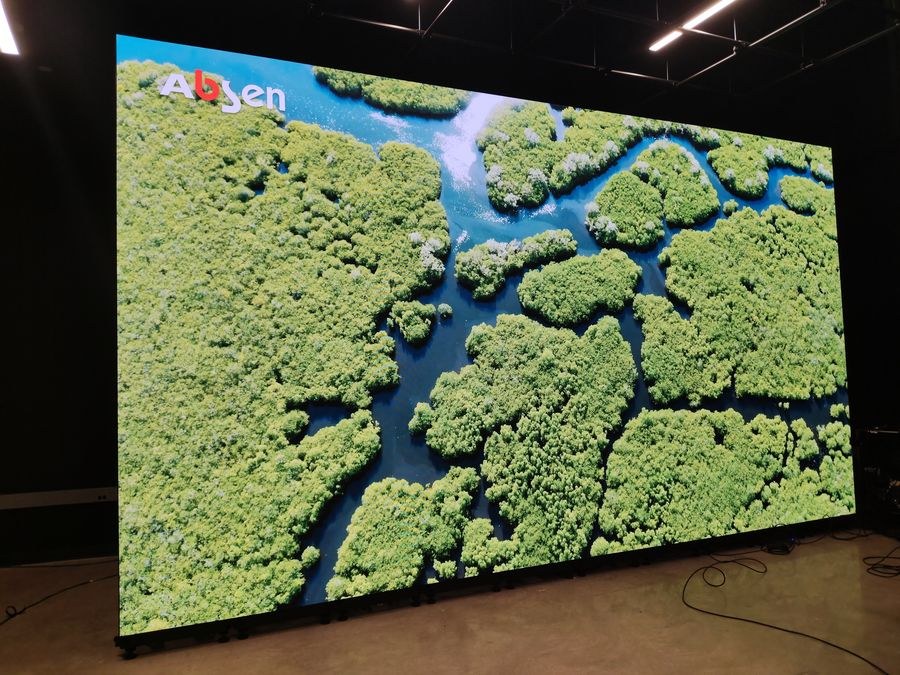
Through large-scale project implementations across numerous institutions at home and abroad, Absen smart education display solutions have accumulated mature, hands-on experience closely aligned with real-world teaching needs. The solutions have been deployed across diverse institution types, including comprehensive universities, medical colleges, and overseas universities, and have powered an XR immersive classroom at Webster University in the United States.
Looking ahead, smart campus development is shifting from standalone device procurement toward the systematic construction of learning spaces. The white paper asserts that educational displays serve as spatial infrastructure supporting long-term teaching. Consequently, product selection and evaluation must extend beyond initial procurement costs to comprehensively account for multifaceted, practical needs, including visual health, classroom usability, system integration, energy efficiency and carbon reduction, and long-term operations and maintenance.
Moving forward, Absen will continue to deepen its focus on smart education, developing healthy display technologies, low-carbon energy-saving solutions, and integrated interactive capabilities while partnering with academic institutions worldwide to collaboratively build the smart learning spaces of the future.
Download the Smart Education Display Solutions White Paper (PDF)